Antarctica Travel Guide 2028: Everything You Need to Know (And Why You Should Join My Expedition)
Antarctica sits at the top of most photographers' bucket lists, and for good reason. It is the coldest, driest, windiest continent on earth, home to no permanent residents, and governed by no single country. Roughly 100,000 people visit each year, which sounds like a lot until you remember that more people climb Mount Kilimanjaro in a single season. If you are starting to research a trip there, here is everything you need to know, along with details of the 2028 expedition I am co-leading.
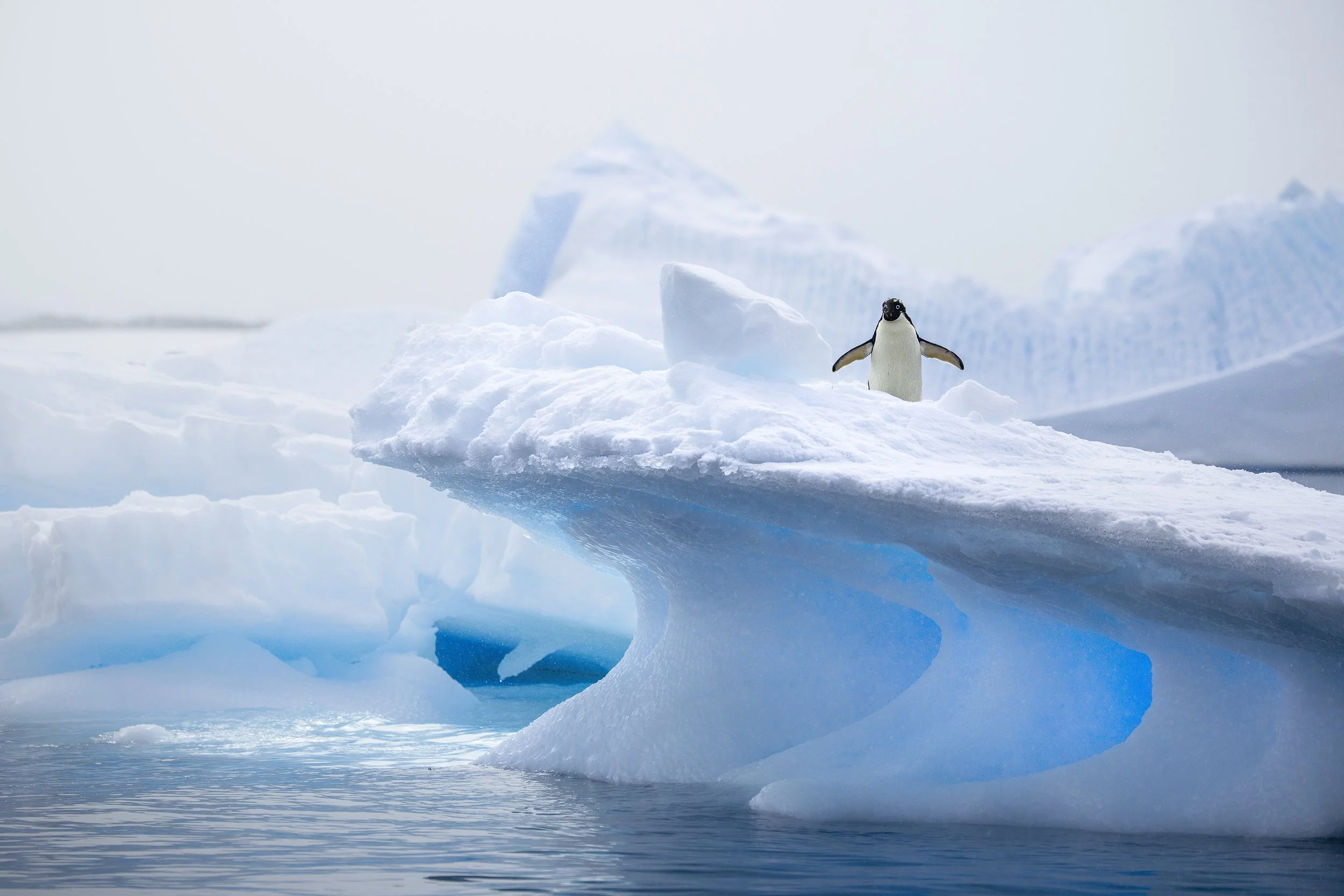
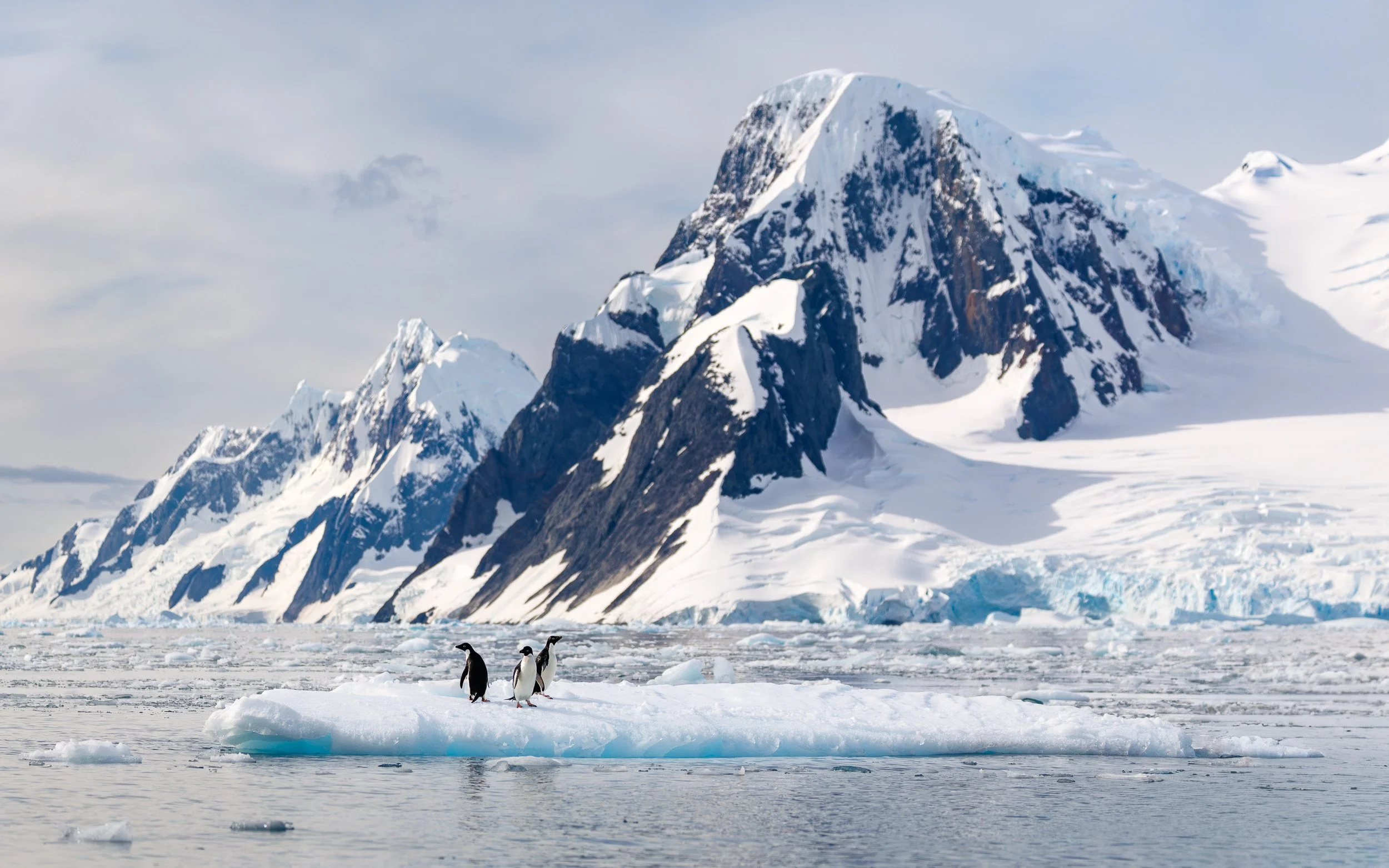
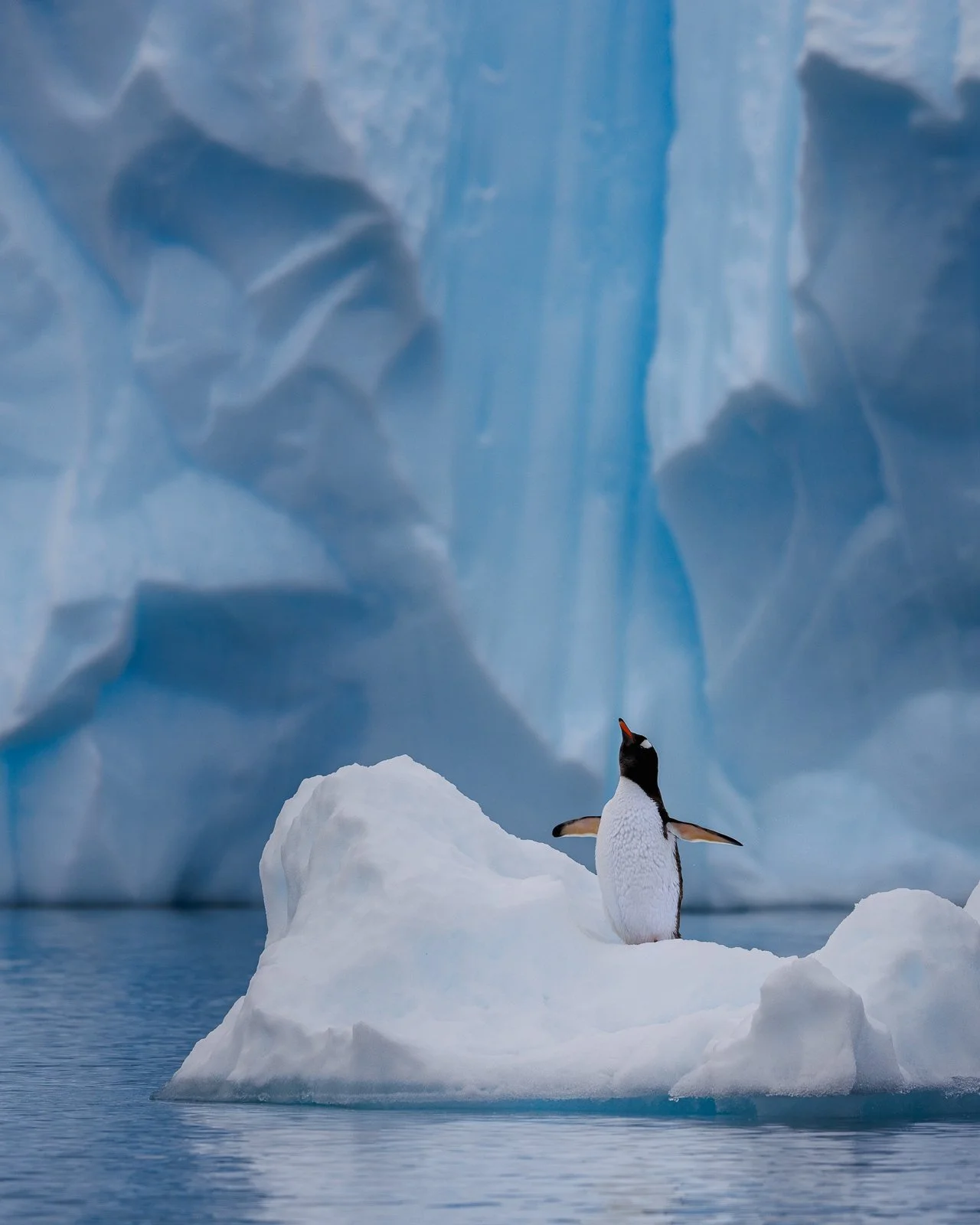
The goal of most photographers visiting Antarctica - getting that penguin on an iceberg shot!
How do you get to Antarctica?
Almost everyone travels by expedition ship. Around 90% of voyages depart from Ushuaia, Argentina, or Punta Arenas, Chile, both close to the Antarctic Peninsula, with a two-day crossing of the Drake Passage in each direction. A small number of operators fly guests from Punta Arenas to King George Island instead, cutting out the Drake, and this is exactly how our 2028 voyage begins - with a flight that will take approximately one hour and forty-five minutes before you set eyes on the White continent for the first time.
When is the best time to visit Antarctica?
The Antarctic summer runs from November to March, and that is the only season tourist voyages operate. November offers pristine, untouched snow and ice. December to February is peak season, with up to twenty hours of daylight, the most newborn penguin chicks, and the busiest waters. March brings the best whale activity, as humpbacks and minkes feed heavily before migration, with softer, golden light as the season turns. Our expedition departs 27 February 2028, timed for that late season light and peak whale activity, while still reaching South Georgia before the season closes.
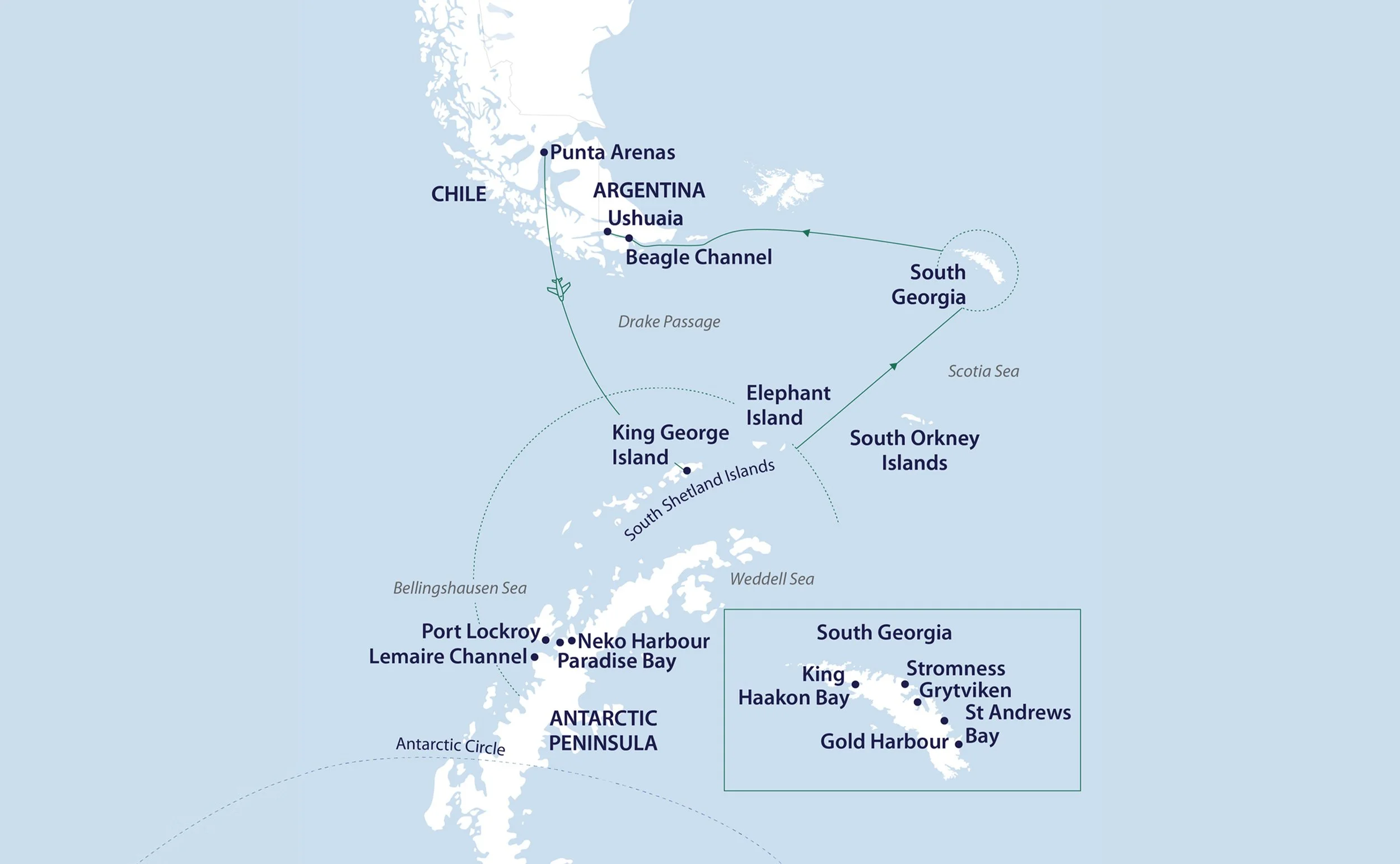
2028 expedition map - image courtesy of Aurora Expeditions
How long should an Antarctica trip be?
Most standard itineraries run 10 days, including four days of Drake Passage crossing. If you want to add the Falklands or South Georgia, look for itineraries of 17 to 20 days. Our 2028 voyage is 20 days, and follows a specific route: the Antarctic Peninsula, the icy Weddell Sea, Elephant Island, and South Georgia, tracing the path of Shackleton's Endurance expedition rather than the more commonly travelled Peninsula loop.
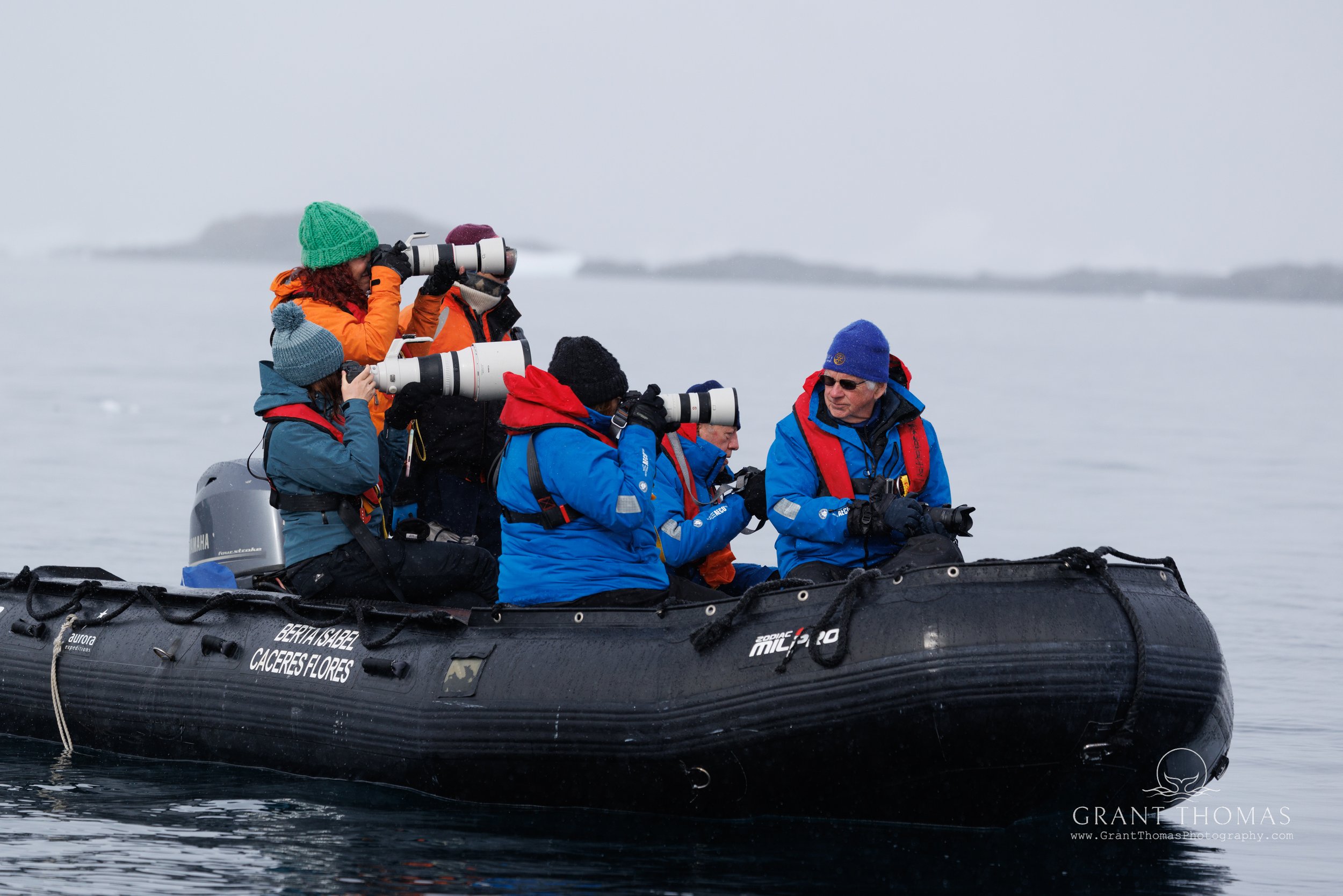
We limit our expedition to 100 guests to allow for smaller zodiac groups for all those lenses!
What size ship should you book?
This matters more than most people realise. IAATO rules limit shore landings to 100 passengers at a time, and ships carrying over 200 passengers cannot land everyone together, so larger ships do split landings or none at all. For our expedition, we limit the number of guests on The Greg Mortimer to no more than 100 passengers, which keeps every landing and zodiac excursion small, unhurried, and genuinely useful for photography.
What will you actually see and do?
Zodiac cruises among icebergs, shore landings among penguin colonies, whale watching at close range, and on this particular route, the chance to stand where Shackleton's crew waited for rescue on Elephant Island and cruise the waters of his legendary open boat journey to South Georgia. South Georgia itself is often called the Serengeti of the Southern Ocean, with hundreds of thousands of king penguins and elephant seals on its beaches. Few Antarctica trips reach this far. Ours does.
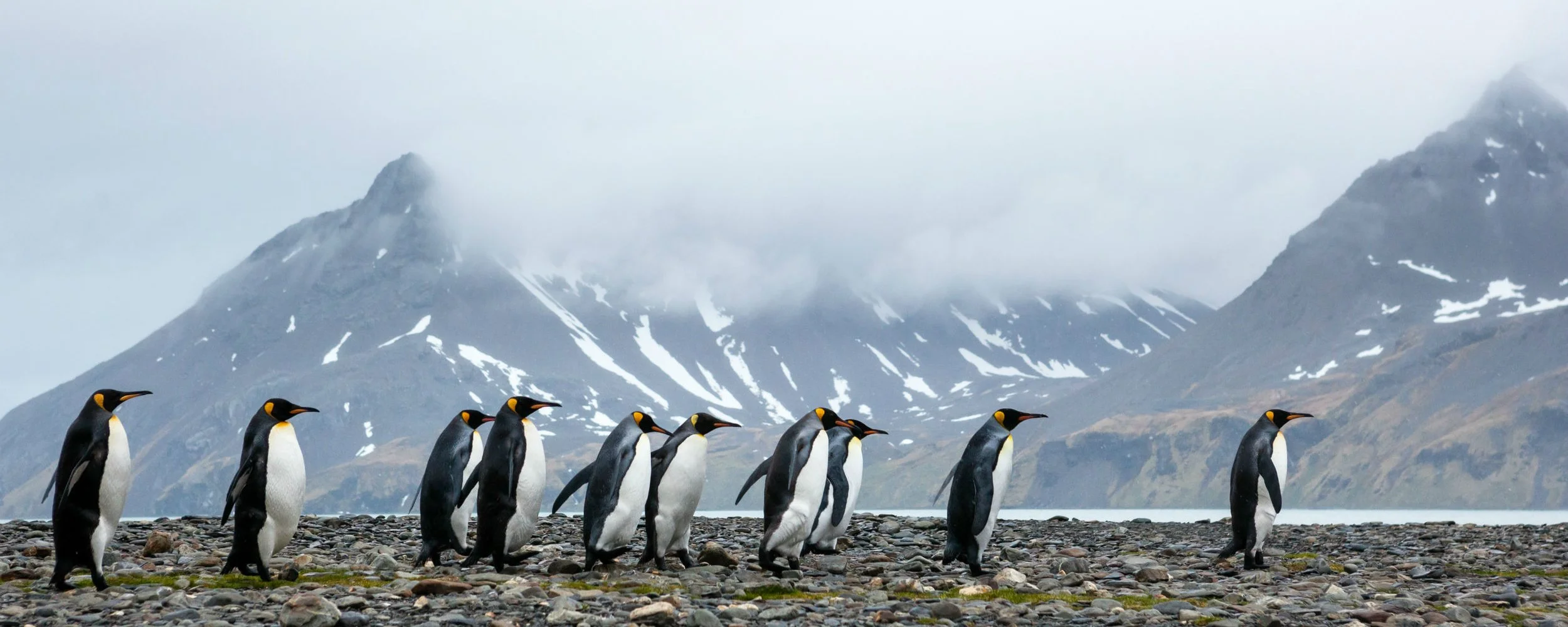
King Penguins marching in South Georgia - image courtesy of Aurora Expeditions
What does a trip like this cost, and is it worth it?
Antarctica voyages range from around USD 500 to 3,000 per day, depending on ship, cabin, and operator, with longer South Georgia inclusive trips naturally at the higher end given the extra distance and days involved. It is not a cheap trip. But for photographers specifically, the value is not just in seeing Antarctica; it is in having genuine guidance while you are there. On this voyage, you will have Nigel Danson, James Popsys, Mads Peter Iversen, Jeroen Van Nieuwenhove, Dani Connor, Jack Lodge and myself on deck and in the zodiacs, working with you on composition and light in real time.
Aurora Expeditions will discuss discounts and cabin availability with you when you enquire with them.
Why this particular expedition
I have shot in the Arctic, in Svalbard and East Greenland, and I know what polar light does to a photograph that no other light can replicate. Antarctica adds scale to that light, glaciers that take twenty minutes to drift past your zodiac, penguin colonies that become entire cities of sound. This 2028 route goes further than most, into the Weddell Sea, to Elephant Island, and on to South Georgia, with a small, dedicated group of photographers there to help you make the most of every single landing.
Places are limited to 100 passengers, and trips like this tend to fill from word of mouth among photographers who have travelled this way before and return guests, which speaks volumes!
Not a photographer? You are still very welcome
Many of the people who join trips like this are not photographers themselves, they are the partner of one, brought along for an Antarctica trip while their other half disappears with a long lens for hours at a time. If that sounds familiar, you are in good company. This trip is built around access to the very best locations on the continent regardless of what you are shooting with, the Weddell Sea’s drifting pack ice, Elephant Island, the king penguin colonies of South Georgia, and an iPhone in good light captures plenty of that properly. Several partners who joined us this way on previous voyages ended up genuinely caught up in it themselves, picking up a new hobby simply from being surrounded by people happy to show them a few things along the way. No pressure, no assumed knowledge, just good company, the best seats in the world for wildlife, and the chance to pick up a few skills if you want them.
I would love to have you with us. You can also read my blogs from the 2024 trip.
Antarctica and South Georgia: Frequently Asked Questions
Do you need a visa to visit Antarctica?
No. Antarctica belongs to no single country, so no visa is required to set foot there. You may need a visa for the country you transit through, usually Argentina or Chile, depending on your passport. Your expedition operator arranges the Antarctic Treaty permit on your behalf, so this is not something you need to apply for yourself.
Do you need a visa for South Georgia?
This is where it differs from Antarctica itself. South Georgia requires its own Passenger Entry Permit, separate from the Antarctic permit, and reputable operators now handle this application directly on your behalf as part of booking. It is worth confirming with your operator that this is included, since arriving without it means you cannot go ashore or join small boat excursions in South Georgia waters.
How much does a trip to Antarctica cost?
Costs vary widely by ship, cabin grade, and itinerary length, broadly from around USD 500 to 3,000 per day. Itineraries that include South Georgia and Elephant Island sit toward the higher end, given the additional days at sea and the extended route, but they also reach places a standard ten day Peninsula loop never touches.
Do you need travel insurance?
Yes, and it needs to specifically cover medical evacuation from a remote polar region, with cover of at least USD 200,000 recommended. Standard travel insurance policies often exclude this, so always check the small print before booking.
Is Antarctica safe to visit?
Yes, within the structure that licensed operators provide. Expedition ships carry experienced medical staff, use radar and forward scanning sonar to navigate ice safely, and plan every landing around current weather and conditions. The Drake Passage crossing can be rough, but ships are built for it, and seasickness medication handles the rest for most travellers.
Can you take a drone to Antarctica?
No. Recreational drone use is banned under IAATO rules, so leave it at home unless you are part of a permitted scientific research team.
What is the polar plunge?
A voluntary jump into the Southern Ocean, usually organised by the expedition team partway through the voyage, followed immediately by warm towels and something hot to drink. It is brief, bracing, and a genuine highlight for most who do it!
How many people are allowed ashore at once?
IAATO limits any single landing to 100 passengers at a time, and ships carrying more than 500 cannot land guests at all. This is why ship size matters so much when choosing a voyage. Our 2028 expedition sails aboard the Greg Mortimer with a limit of 100 passengers in total, which keeps every landing small and unhurried.
What is the best time of year for photography in Antarctica?
Early season, November, gives the cleanest, most untouched snow. Peak season, December to February, brings the most daylight and the highest concentration of penguin chicks. Late season, February into March, brings the strongest whale activity and softer, lower light as summer turns toward autumn. Our 2028 voyage departs 27 February, timed deliberately for that late season light and whale activity, while still reaching South Georgia before the season closes.
Why does this expedition follow Shackleton's route specifically?
Most Antarctic voyages stay within the Peninsula. This one extends into the Weddell Sea, to Elephant Island where Shackleton's crew survived months under upturned lifeboats, and on to South Georgia, retracing the open boat journey that brought their rescue. It is a longer, more historically layered route, and one far fewer photographers get to experience.
Do I need to be a photographer to join this expedition?
No. Many guests join as the partner of a photographer rather than as photographers themselves. Access to every landing, zodiac cruise, and wildlife viewing opportunity is the same for all guests, regardless of experience or equipment.
Can I just use my phone for photos on this trip?
Yes. Modern phone cameras handle Antarctica’s bright, open landscapes well, and several non photographer guests document the whole trip this way. The expedition leads are happy to share a few phone specific tips along the way if useful.
My partner is the photographer, not me. Will I still enjoy this trip?
Very much so. Most voyages like this include guests in exactly this position, and many end up just as engaged in the experience, even picking up photography skills themselves along the way, simply by being immersed in it for twenty days alongside people who enjoy sharing what they know.